Starter Concertinas
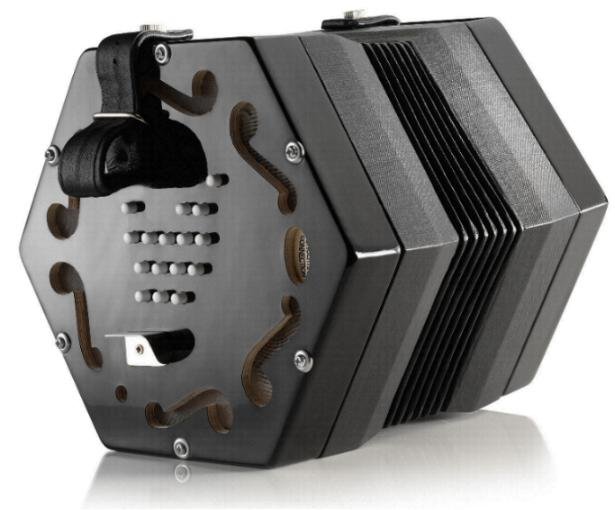
Jackie and Jack
English Concertina
The Jackie and Jack are 30 key English concertinas.
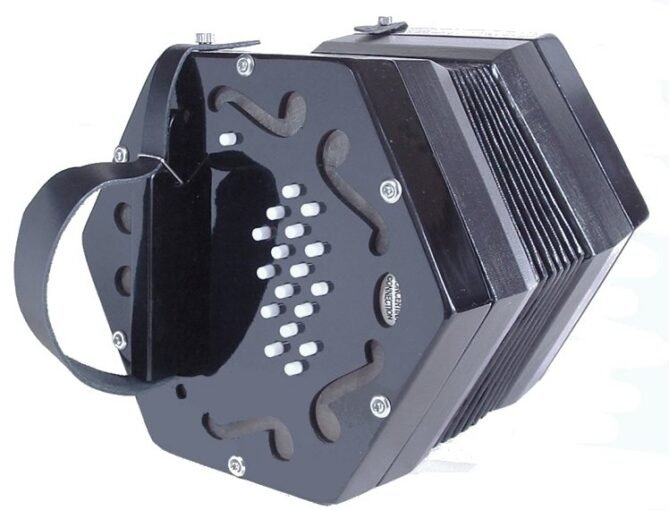
Elise
Duet Concertina
The Elise is a 34 key Hayden duet concertina.
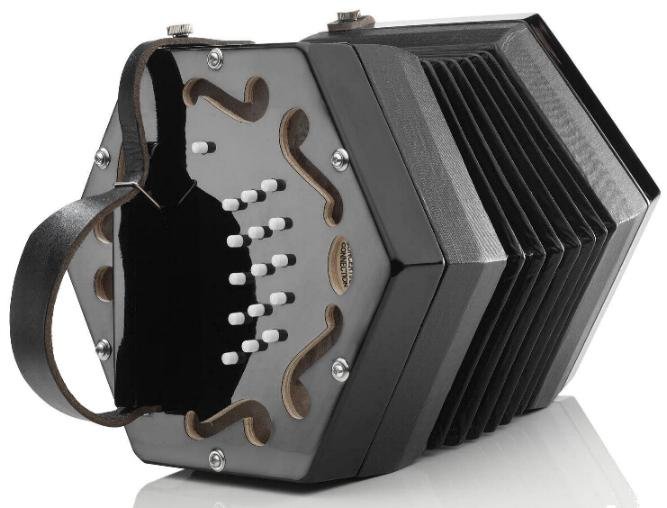
Rochelle
Anglo Concertina
The Rochelle is a 30 key C/G anglo concertina.
Which Concertina type is best for you?
Choosing the right concertina for the way you want to play music, is a very important decision. It is worth taking a few minutes to learn about the differences. The 3 concertina types: English, Duet, and Anglo, are used in different musical styles, and have different characteristics.
The English Concertina
The English is the original concertina, patented in 1829 by Sir Charles Wheatstone. It is fully chromatic, meaning it 'has all the white and black notes', just like the piano, violin, etc..
This means that it can play in any key, which allows you to play all kinds of music, ranging from classical, to folk and dance music, pop songs, jazz... English concertinas play the same note on both bellows directions (pull and push). If you want to be able to play a wide variety of music in different musical styles and want a concertina without any 'limitations', the English would be a good choice.
This means that it can play in any key, which allows you to play all kinds of music, ranging from classical, to folk and dance music, pop songs, jazz... English concertinas play the same note on both bellows directions (pull and push). If you want to be able to play a wide variety of music in different musical styles and want a concertina without any 'limitations', the English would be a good choice.
The Duet Concertina
The Duet concertina was patented in 1844, also by Wheatstone. The layout of the first duets was called the Maccann system. Our duet models have the Wicki/Hayden layout.
The Elise is partially chromatic, meaning that it has all the 'white notes', but only some of the 'black notes'. This is because of its small size. Larger models have more notes. This is not a problem if you want to play popular tunes, folk music, or accompany yourself or other players. The Elise can play in the keys common in general popular music. Just like the English concertina, the Duet also plays the same note on both bellows directions (pull and push).
The Elise is partially chromatic, meaning that it has all the 'white notes', but only some of the 'black notes'. This is because of its small size. Larger models have more notes. This is not a problem if you want to play popular tunes, folk music, or accompany yourself or other players. The Elise can play in the keys common in general popular music. Just like the English concertina, the Duet also plays the same note on both bellows directions (pull and push).
The Anglo Concertina
The anglo concertina is based on the German harmonica, invented in 1834 by Carl Friedrich Uhlig, and was originally called the German-Anglo concertina.
The Anglo is diatonic in design; the notes of one row consist of notes of the C major scale and another one consists of the notes of the G major scale. There is a 3rd row on the standard 30 key anglo model with all the accidentals (black notes) and some doubled white notes. The anglo is partly chromatic, but it is not really setup to play in keys with a lot of sharps or flats. Just like other folk instruments, the anglo functions best in the primary keys and modes. It is great for traditional Irish music, and other folk music. The anglo is the only concertina that plays a different note on each bellows direction (pull and push).
The Anglo is diatonic in design; the notes of one row consist of notes of the C major scale and another one consists of the notes of the G major scale. There is a 3rd row on the standard 30 key anglo model with all the accidentals (black notes) and some doubled white notes. The anglo is partly chromatic, but it is not really setup to play in keys with a lot of sharps or flats. Just like other folk instruments, the anglo functions best in the primary keys and modes. It is great for traditional Irish music, and other folk music. The anglo is the only concertina that plays a different note on each bellows direction (pull and push).


